Tampilkan postingan dengan label Technology. Tampilkan semua postingan

Minggu, 18 September 2011

Europe Gives Mesoblast Approval for Clinical Trials of “Off the Shelf” Stem Cell Treatments for Major Heart Attack Victims

To treat heart failure, Mesoblast’s Revascor treatment uses stem-cell technology to rebuild blood vessels and heart muscles. Mesoblast is located in Australia and the stem cell treatment does not use embryonic stem cells.  Revascor is based on stem cells in bone marrow and the miraculous finding here is that it does not set off any immune responses.  225 patients in Europe will be enrolled who have suffered severe heart attacks.  There have already been some other clinical trial results reported back in January.

Mesoblast's Heart Stem Cell Treatment to Rebuild Blood Vessels and Heart Muscles Has Positive Results–Regenerative Medicineimage

In addition there are US FDA trials for treating chronic back pain

Mesoblast Gets FDA Approval to Begin Advanced Clinical Trials Using Stem Cells to Treat Chronic Lower Back Pain

MPCs from unrelated donors have the unique ability of not stimulating an immune reaction when introduced into the patient. MPCs from donors can be grown in large numbers and made available for treatment in much the same way as a drug. Mesoblast’s MPCs have a strong safety profile with no cell-related adverse events to date.

This look very exciting for those who have had a major heart attack for sure.  In addition the company is also working on stem cell solutions for cancer.  BD 

An “off-the-shelf” stem cell treatment for heart attacks is now a step closer, following the go-ahead for an early-stage clinical trial in Europe, writes Jonathan Wood.

Many proposed treatments using stem cells to help repair the damaged heart are hampered by the need to use the patient’s own cells to avoid any immune reaction. Such an individual approach can be time-consuming, involving the growing of the patient’s cells, and multiple visits to the doctor.

But Australian company Mesoblast is developing adult stem cell therapies that are ready to use when needed for any patient, much as a standard drug. (It does not use embryonic stem cells, which are more controversial.)

Its Revascor product is based on a particular type of stem cell in bone marrow that does not set off an immune response. The “mesenchymal precursor cells” can be isolated from bone marrow donated by a healthy adult and grown to provide treatments for many patients without fear of rejection.

http://www.ft.com/intl/cms/s/2/0cd62b6c-de79-11e0-a2c0-00144feabdc0.html

Man in the UK Who Severed His Thumb Gets His Own Big Toe As A Replacement

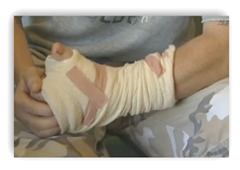
We are hearing more and more about these types of surgery and in this case it imagemakes sense as you need your thumb and that’s not to say you don’t need your big toe but without the thumb, it’s hard to grasp and pick things up. 

Doctors Reattach Leg Backwards On Purpose-Reconstructive Surgery for Cancer

The man is a plant operator and he will be able to go back and make a decent living.  He won’t be able to run like he did before, but walking and moving around without the toe will not be a a problem.  They tried to re-attach the thumb bit it didn’t work so the next option was the big toe.  BD   

James Byrne, 29, from Fishponds severed the thumb on his left hand last December while sawing through wood.

After an attempt to re-attach his damaged thumb failed, plastic surgeons at Frenchay Hospital transplanted his left big toe to his hand.

Surgeon Umraz Khan said the gain outweighed the loss as losing a toe "is not as disabling as losing a thumb."

Mr Byrne said: "Mr Khan re-attached my thumb but it had been badly damaged and although we tried everything, including leeches, to get the blood flowing again it didn't take.

http://www.bbc.co.uk/news/uk-england-bristol-14903846

Rabu, 14 September 2011

Machine Learning Software Working Behind the Scenes Should Move With Caution in Healthcare-Writing the Unreadable With Rogue Algorithms With No Human Intervention

We are hearing more and more about the use of machine learning and this week we have WellPoint banking their bucks on reducing costs with it’s use.  The computing power is phenomenal and if you are not already aware, there are other industries that are using machine learning too.  You will get more benefits by a landslide; however a lot of this is brand new territory and we have seen some oddities that have occurred, one being called a Flash Crash and we all know that one.  You imagehave some algorithms that are programmed to hide and others that are programmed to go find them. 

The Quiet Rise of Machine Learning-Like IBM Watson Offers With Speed and Learned Analytics-Congress Needs Technology This To Make Better Laws & Collaborate

The reason for caution is that there are going to be some odd happenings with data here and there and thus the awareness to question if something does not appear to be correct.  We have so many digital illiterates today that don’t do that and never question and other people who are at the end of their decision process get hurt or fleeced.  Again, the data being input has a huge impact as well as the old saying of garbage in and garbage out has not changed and I don’t that part will ever change but we are getting better.  Microsoft has a tool kit for writing “machine learning” applications too so everyone’s into it and it works of course with the cloud. 

Microsoft Research Launches Free Tool Kit to Assist Big-Data Scientists-More Ways to Use the Azure Cloud With Large Scale Data Sets And Algorithms For Analytics

Wait until le load up those ICD10 codes in there to decipher imagewhether or not that bite on the patient was from an Orca or a McCaw.  There’s a ton of processing power with IBMWatson 70 servers…as I said lawmakers could really make good use of this and they need it more than Wellpoint but you do have to pay for it and lawmakers could behave like real humans again and collaborate if everyone starts with the same numbers. 

WellPoint Hiring IBM Watson Technologies–Congress Needs to Wrap Their Heads Around Using Technology That Processes 200 Million Pages of Info in 3 Seconds to Make Laws

This is a great presentation by Kevin Slavin who tells us about the affects of algorithms in the world today and worth a listen.  3 years ago when I put the word center stage on my blog, it was for a reason to educate and bring the word and it’s meaning into every day use in healthcare.  I had people telling me I was nuts and nobody’s going to get that,…hmmm, but where are we today and yes we are writing the “unreadable” as we have known it for years with software development.  You have to love his example of 2 algorithms on Amazon that with no human intervention but just reacting with each other, ran the price of a book for sale up to $12 million, just out bidding each other and stuck in motionThis is why I say caution with healthcare and to question something that may not look right as we will need to live with those infrequent algo mashes that go bonkers, like a Flash Crash with those algos.  The video is below but use the link for even more information I included on the original post, lots of it there.

How Algorithms Shape Our World–TED Talks Kevin Slavin–Writing the Unreadable And A Good Reason to Get Into the Math

Kevin Slavin–Algorithms

Now how monumental and important is this, well if you have seen the latest Ipad commercial, there’s Kevin Slavin’s talk right at the beginning focused.  Check it out below.  Truth of the matter is we don’t have the luxury any more to say “I don’t do math”, not my doing just bringing around the awareness. 

IPAD Commercial

And speaking of books, I’ll note this one as a must read again as I have so many times on this blog…maybe I’ll get royalties <grin>, just kidding there.  I have folks on Twitter telling me they are reading now, folks in healthcare.  Deceptive, mismatched data and algorithms created for marketing versus actual accuracy lurk out there today sadly and we are actually seeing some of them become unraveled as people ask questions, “show us your code. “ 

This is absolutely huge in the financial side of things right now with FINRA and the SEC asking high frequency traders for their code. In the High Frequency World of trading the battle of hardware is just about coming to a close, in other words there’s not a lot more they can do to make servers go faster, so the next move, are more “creative machine learning algorithms” for the coders to write and believe me, they are on this already. 

“Proofiness–The Dark Side of Mathematical Deception”–Created by Those Algorithms–New Book Coming Out Soon

Back on target, yes IBM Watson will give us some huge abilities to sort and analyze data quickly, but we will need to be aware of those rogue algos as they will pop up here and there and there and we’ll study them just the quants do on Wall Street that pull those algos out of the exchanges to do the same thing.  It is critical too in healthcare as we are now talking a human life and thus the words of caution to ask if something looks strange and don’t let your common sense get buried with results on the screen if they don’t look right.  Here’s some other folks with some predictive machine learning to market. 

An Algorithm Can Predict Cardiac Arrest 24 Hours Before it Happens With “Machine Learning Technologies”

With involving the intricate and confusing coding of healthcare and if and when this develops beyond just guidelines and individuals and doctors are “required” to use this information, we could very well be in the “land of no return” when it would come back to tracing a claim and how the diagnosis and CPT payment codes are entered.  Some of course, the obvious would be there, but  what if? 

What if those algorithms with claims numbers, diagnosis numbers, and other related information went haywire…would one end up with a medical bill that got inflated just like the example in the TED video of $12 million for the book on sale at Amazon?

Could happen but we don’t know yet so again and awareness and the fact that there will be issued to live with when machine learning becomes larger in healthcare just as it is in the financial market and we can get some Quants in there to work on them, just just like Wall Street does.

We can start naming our own healthcare algorithms, like theICD shuffler, the surgeon’s knife or maybe CPT Chaos”, and so on <grin>. 

New Rules Help in Preventing Another Flash Crash But How About the Disruptor Algo Encountering the Boston Shuffler, The Knife, Carnival or Other Named Algorithms That Lurk"

The algorithms have teeth with contemporary math.  So again, let the doctors test and try and test again and from the consumer side, guidelines only and don’t tie in in pay for performance by all means with the use of machine learning or it will be abused and mis interpreted for profit.  BD 

IBM demonstrated how doctors can use its Watson supercomputer to diagnose and treat patients at the National Press Club on Tuesday.

Dr. Herbert Chase, a professor of clinical medicine at Columbia University, entered a hypothetical patient's symptoms, and Watson was able to correctly diagnose the patient with Lyme disease.

Watson even suggested a drug to treat the condition. Dr. Chase then told the computer the patient was pregnant and allergic to penicillin. This new information led Watson to change its suggestion to a more appropriate drug.

Selasa, 13 September 2011

New ICD-10 Codes Get Very Specific–Was the Patient Bitten by an Orca or a Macaw–What’s the Big Rush for All of This (Video)

You have to love this video and the conversations between the 2 and anybody in medical billing will certainly jump on this one for sure.  I liked it and thought this is really good for the general public to know.  When I was writing my medical records program I had to import all these updates to the current system all the time, each quarter codes are added and codes are deleted.  When doctors create their super bills, this means change if any of them affect the most commonly used codes. Shoot years ago I had a doctor hit the ceiling when all the diabetes codes were expanded and this was 5-6 years ago.

140,000 codes will be there for the physician to choose from.  There are some that are insulting like “bizarre personal appearance” and gee what a code huh?  Let’s see what CPT code would unite with this one?  You can go all over the place with that one.  Granted new technologies needed to be added but listen up and hear about the 3 codes for walking into a lamppost too.  This is hilarious.  Heck what if the patient doesn’t know if they were bit by a turtle or tortoise?  Water skis on fire is yet one other great code!  October 1st on 2013 is the transition date and there’s a lot of companies just ready to cash in here for the big bucks.  India is ready to help us with our IT misery on this one.

Healthcare's ICD-10 Project Deadlines Could be a Jackpot for India’s IT Companies

There are also a lot of US companies who have produced the software to translate between the old and the new, again cha ching ching in Health IT expenditures and how long before that bubble bursts one day?  In addition there’s a lot of talk requesting that the process be delayed and Dr. Halamka up at Harvard has been one who has voiced his opinion on this simply due to the fact that it is too much on the plate for healthcare CIOs today.  You can read more about his recent interview on ICD10s and the over stressed CIOs of healthcare below and I have touching and blogging about that here on several posts for the last year myself. 

Dr. Halamka Speaks About Health IT–“CIOs are on Overload” and It Would be A Blessing to Stall Off ICD-10 to 2016 - The Straw Breaking the Camel’s Back

That is very true and the folks who make and set these timelines are usually those without any real “hands on” experience in this area and just project. 

Should ICD-10 Implementation Be Delayed With A SnoMed Adoption Focus Come First?

This has a snowball effect with rolling over to the public CIOs who have said they know more about health IT now than they ever expected to learn and absorb, not to mention be responsible for implementation.  WellPoint plans on having machine learning do some of this for you with IBMWatson technologies it seems with some machine learning techniques soon with maybe just jumping in a plucking those new codes out…time will tell how that will work:)  I used to work in logistics and the harmonized tariff for customs is not anywhere near this level, and that is from business that is highly automated too by comparison.  BD 

Healthcare Reform Putting Additional Pressure on Public and Medicaid CIOs-The Health IT Bubble Gets Closer As Money And Digital Literacy is Scarce

http://online.wsj.com/video/new-medical-billing-system-provides-precision/52CE9481-CE69-4F50-BA15-9DA789751728.html

Senin, 12 September 2011

Hoag Hospital Using daVinci Robot for Gynecologic Surgery Procedures

According to their website the hospital is using the latest version of the robot which includes dual consoles and 3D vision for the surgeons.  This is the first mention I have heard of the robot for women’s healthcare surgeries as we all know it has been used extensively for prostate and heart surgeries.  Now all we need is like Johns Hopkins has done with the $150 Kinect, hook it up and create some “no go” safety zones:)  Kinect might end up being daVinci ’s best one friend one day. 

Kinect And daVinci Surgical Robot Do Simulated Surgery imageSuturing Together (Video)

Back in January the University of Washington was working on this hack and now we have a video from Johns Hopkins where they have simulated a surgical procedure using gestures.  As the article states this is in the early stage here, but it’s been done and seems to be working pretty well during play time here.  BD

As the highest volume provider of robotic surgery in Orange County, and the first multidisciplinary program of its kind in Southern California, Hoag’s Gynecologic Robotic Surgery Program provides a patient-centered, integrated team approach to gynecologic surgical care using evidence-based medicine, progressive technology and innovative treatment options.

image

At Hoag, robotic-assisted surgery is performed utilizing one of four state-of-the-art da Vinci® Surgical Systems. Each robotic unit consists of an ergonomically designed surgeon’s console, a patient-side cart with four interactive robotic arms, a high-performance vision system and proprietary EndoWrist® Instruments. Powered by state-of-the-art robotic technology, the surgeon’s hand movements are scaled, filtered and seamlessly translated into precise movements controlled exclusively by the surgeon. And in the case of the dual console da Vinci® Si HD Surgical System, two surgeons can work together simultaneously to perform highly complex minimally invasive surgery.

image

Hoag is the first hospital in Southern California to acquire the newest robotic surgical device – the dual console da Vinci® Si HD Surgical System – and utilizes four state-of-the-art da Vinci® robots as part of its comprehensive robotic surgery program.

Conditions that may be appropriate for treatment with robotic surgery include:

Minggu, 11 September 2011

Cochlear Ear Recalls Latest Range of Implants Due to Unexplained Failures

This is kind of sad with this recall as many who wear them depend on the units.  In addition the Cochlear technology is also being used to test for balance disorders with new implant procedures at the University of Washington. 

Ear Implant Device Using Technology from Cochlear Implants imageBeing Tested for Balance Disorder–First Patient Receives Implant

Hopefully this will pass over soon and those who have already been implanted with the device don’t have to worry about the recall as it’s for those who have not been implanted yet.  Last year another company in California also had a recall of implanted hear devices. 

HiRes 90K Cochlear Ear Implant Recalled By Advanced Bionics To Address Safety Concerns With FDA

There is one other company I am aware of, Esteem who received FDA approval last year for their implanted product and so far no recalls there but the approval from the FDA just came in March of 2010. BD

MELBOURNE—Cochlear Ltd., the world's biggest maker of bionic ears, on Monday recalled its latest range of hearing implants after a recent unexplained increase in failures.

Cochlear shares plunged as much as 27% after Chief Executive Chris Roberts said the company has stopped manufacture of the Nucleus CI500 range, which in the 2011 fiscal year made up 70% of the company's sales of implant units.

Analysts said the recall could lead to prolonged market share gains for Cochlear's competitors such as the Austria-based Med-El. Cochlear has about 65% of the global hearing implant market.

"Reliability is very important," Mr. Roberts told analysts on a conference call. "If there's some things happening that we don't understand, we're far, far better to stop and understand it...rather than just battle ahead and hope it all works out."

http://online.wsj.com/article/SB10001424053111904265504576565540894094816.html

Jumat, 09 September 2011

MediSens Graduates from UCLA's On Campus Technology Incubator–Funded and Moving to Northern California–Body Monitoring Systems

The Clinical Movement Assessment System (CMAS) is designed for a wide variety of medical applications and could potentially benefit health care professionals and facilities specializing in the areas of physical medicine and rehabilitation, neurology, orthopedics, and physical and occupational therapy.  Clinical trials began in January of 2010.  image

MediSens at UCLA Begins Clinical Trials After Receiving FDA Approval – Devices That Report Data and Participatory Sensing

If you are old enough to remember the TV show “Get Smart” then you remember the agent’s telephone in his shoe, but this has been developed much more than just a phone and now one’s walking gate is measured from the “shoe”.  In the same way that PEIR monitors your travel habits, a CENS project called "footsteps" measures your walking activity.

Part of the study included “participatory sensing” in other words participation patients with systems that do not disrupt and distract.  In addition to healthcare there are a few other interesting programs going on at the NanoCenter.   Funding was given by an investor in the Los Angeles area.  The sensing in the shoe is also being expanded to using on a “bed sheet”.  Diabetes with sensing in the foot area was one of the first targets developed with the technology. 

What is seeming to make this technology a little different in addition to running a clinical trial is the effort to make the technology “non disruptive” and we barely see that anywhere else but rather have developers creating more and more software applications that in fact take a good portion of our time and actually disrupt.  On that note, there are still those in executive and other type of jobs that can’t figure out why user’s are not jumping into their algorithms:)  I can’t even begin to think about all the social chatter that’s out there with experts who have never used the technology themselves but pound on the social networks telling everyone else about what is good for them.:)  Even all the way up to the government level we see that too and then find out, they don’t use any of the technologies or devices they profess:)

If technology like this can be developed and work without disrupting human life and still have success, there’s a lot to be said for that and it’s the way monitoring should be done versus the heavy “marketing” approach we see in so much of mobile health today with so many having similar products with another company out there.  Shoot if we use too many monitoring technologies, we would have devices in our ears, on our neck, in our hair….well you get the picture, and with that every program requiring interactions that takes time. Planned and devised for human participation is key.  BD 

Press Release:

MediSens Wireless, which in 2009 was one of the first startup companies selected for the UCLA on-campus technology incubator at the California NanoSystems Institute (CNSI), has received funding from a strategic investor in the greater Los Angeles area. The young company, the first to 'graduate' from the incubator, will now set up its own base of operations in Northern California.  

The technology incubator was established two years ago to nurture early-stage research and to help speed the commercial translation of technologies developed at UCLA. It was inspired by the success of Nano H2O, a California startup that licensed water purification technology developed by UCLA researchers and conducted proof-of-concept research at CNSI.

MediSens, which focuses on the development and manufacture of personal body-monitoring systems for medical and health applications, moved into the incubator to begin commercializing technology invented by Majid Sarrafzadeh, a professor of computer science and engineering at UCLA's Henry Samueli School of Engineering and Applied Science and co-director of the Wireless Health Institute at UCLA.

image

Sarrafzadeh and his team formed the startup when they created a "smart shoe" — a shoe equipped with a device allowing it to monitored remotely, enabling health care professionals to keep track of patients with balance problems, such as those with diabetes or those starting a new medication regime. This technology will be used to develop body-monitoring systems with specific applications for diabetics with peripheral neuropathy — the loss of sensation in the foot — and those with health issues that affect their balance.

MediSens began clinical trials in 2010 on its novel Clinical Movement Assessment System (CMAS), a wireless monitoring technology for assessing muscle and neuromotor functions in the upper extremities. CMAS is designed for a wide variety of medical applications and could potentially benefit health care professionals and facilities specializing in the areas of physical medicine and rehabilitation, neurology, orthopedics, and physical and occupational therapy, among others.

It is anticipated that the system will provide clinical assessments of fine motor movement, muscle strength, hand-eye coordination and patient responses to treatment. Repeat assessments could lead to early warning and detection of deteriorating conditions.

Additionally, MediSens-patented technology is being implemented on a "smart bedsheet" to monitor patients in bed in real-time, with quantifiably preventative objectives in mind.

According to Behrooz Yadegar, the CEO of MediSens, the company will move to Santa Clara in the Silicon Valley area, where it plans to double its staff — currently at five employees — within a year. At its new base of operations, the company plans to further product hardware and software development and begin marketing and development for its wireless technologies.

MediSens Wireless was the first spinoff from the Wireless Health Institute, which Sarrafzadeh helped create. UCLA's Wireless Health Community is made up of experts from many disciplines across campus, including engineering, law, management, medicine, nursing, public health, and theater, film and television.

The California NanoSystems Institute is an integrated research facility located at UCLA and UC Santa Barbara. Its mission is to foster interdisciplinary collaborations in nanoscience and nanotechnology; to train a new generation of scientists, educators and technology leaders; to generate partnerships with industry; and to contribute to the economic development and the social well-being of California, the United States and the world.

The CNSI was established in 2000 with $100 million from the state of California. An additional $850 million of support has come from federal research grants and industry funding. UCLA CNSI members are drawn from UCLA's College of Letters and Science, the David Geffen School of Medicine, the School of Dentistry, the School of Public Health and the Henry Samueli School of Engineering and Applied Science. They are engaged in measuring, modifying and manipulating atoms and molecules — the building blocks of our world. Their work is carried out in an integrated laboratory environment. This dynamic research setting has enhanced understanding of phenomena at the nanoscale and promises to produce important discoveries in health, energy, the environment and information technology.

http://newsroom.ucla.edu/portal/ucla/ucla-start-up-company-and-creator-213383.aspx

Mitochon Free EHR/PHR/HIE Systems Connecting to Medicity HIE (Subsidiary of Aetna) at Hoag Hospital in the OC

Mitochon software as a service is located in Orange county as well.  Along with Practice Fusion, they are another free medical records system for doctors to take imageadvantage of and received their stimulus package for attesting and using the product.  Not being familiar with their business model I am guessing to support the free offering that data is some where along the line here sold as that is usually the business model found as something has to support the free offering unless there’s a few big millionaires that are donating all the money.  A little history here the HIE services used by Hoag are a subsidiary of Aetna the insurance company and Hoag was already into their integration and use of Medicity before the Aetna acquisition.  You can clearly begin to see the effects with mergers and acquisitions today in healthcare. 

Hoag Memorial Hospital Connects 250 Community Physicians To Their HIE Via Medicity (Recent Acquisition By Aetna)

Aetna to Acquire Medcity-Health IT Connectivity Vendor-Former CEO Takes Position on Board at Boeing

A few days ago the biggest HMO group in Orange County was purchased by United Healthcare, so insurer stakes in Health IT are all around us and thus I try to bring this awareness around so when making a purchase today you know where your bottom line profits could be going, especially in light of trying to get more smaller and mid size companies in existence in the US to create jobs. In Health IT areas it’s getting down to the linking and competiveness of the insurance IT infrastructures going way beyond just processing medical claims with all the various subsidiaries that are out there today and sometimes imagehard to recognize as some have some pretty long daisy chains.  I also wonder how much life there will end up being for the non profit HIEs that were set up as commercial competition here seems to be knocking on their doors all over the US. 

United Healthcare To Buy Huge Chunk of Orange County, California Managed Care Business with the Purchase of Monarch Healthcare–Subsidiary Watch

Mitochon systems uses a partner named BAC Medica Marketing who also has a long list of consulting and Health IT support they sell, so again I don’t know in full the partnership relationship in detail between the two companies and the Mitochon systems website has a number of other partners listed.  The EHR  has been certified by the Drummond Group to quality for stimulus money and users of the system will be able to connect to Hoag Hospital for electronic exchanges.  BD 

Mitochon Systems Demo

NEWPORT BEACH, Calif., Sep 8, 2011 (GlobeNewswire via COMTEX) -- Mitochon Systems, a provider of free certified electronic health records systems and connectivity solutions for physicians, has announced that it now has built in connectivity from its EHR to Hoag Hospital's Health Information Exchange, which is powered by Medicity, an industry leader in the architecture, implementation and support of HIEs across the US, bringing robust content, proactive care communities, and meaningful applications together in a coherent, connected environment.

"Medicity is a fine partner for Hoag and we are thrilled to be working with them to connect physicians, patients, outpatient offices and Hoag itself," said Andre Vovan, M.D. Mitochon Founder and Hoag affiliated Physician. "This is a tremendous step toward our goal of generating better outcomes for patients, controlling costs and saving lives."

Mitochon Systems, located in Newport Beach, California, is a free certified HIE/EHR/PHR service that connects physicians, hospitals and patients into a Healthcare Information Exchange (HIE). Mitochon offers a free EHR (Electronic Health Record) and PHR (personal health record) systems for the synchronization of healthcare information. Mitochon seeks to empower physicians, hospitals and patients to make the most accurate, efficient and cost effective healthcare decisions through the deployment of its HIE and EHR products. More information about Mitochon Systems is available via its corporate website at www.mitochonsystems.com or by calling 1.877.817.0902.

Kamis, 08 September 2011

World Economic Forum Rankings–US Falling Again in Most Categories–5th in Global Competitiveness and 90th in Macro Economics (Math)

In trust with politicians we are ranked at 50th place, and not a big secret there with digital illiteracy running rampant through our Lawmakers at every level including Washing ton.  In macro economics (this includes math) the US is in 90th place.  There are others of course worse than the US, but when you think back to just a few years ago, the US was at the top of almost all the categories.  We hear this from companies who operate in the US and have international interests as well, Intel is one example.  Bill Gates too has testified year after year in front of Congress trying to get a stir going as well, folks that code predict but many have not figured out this bit of wisdom yet. 

Intel CEO States the US Faces Decline in Tech Jobs–Announces Purchase of German Wireless Chip Company Infineon

Intel CFO – US Not Taking High Tech Job Creation Serious Enough – A Reminder That We Are Falling Behind

in 2010 at Berkeley, Bill Gates said asked “are the brightest minds working on the most important issues”.  Well one look at Washington and that answers that with many that work on the Hill but still live in the 70s.  BD 

Bill Gates speaks at UC Berkeley Global Health, Education and Thoughts on Philanthropy

The US has fallen in the World Economic Forum's competitiveness rankings for the third year running. "The United States used to be very much in first place. Now it has dropped to fifth. Some elements suggest it may fall further in the future," Robert Greenhill, chief business officer of the World Economic Forum, told CNBC.

http://video.cnbc.com/gallery/?video=3000043936

Security Breach at Stanford Hospital - Patient Found it - Not the Fault of the Medical Records System but Rather a Careless 3rd Party Analytics/Billing Company

This is important to note as this time it was not the university or their IT systems, it was rather a spreadsheet from the ER that was to be used by the 3rd party, Multi-Specialty Collection services for analytics purposes.  We all know how medical billing gets analyzed by many 3rd parties, and some are even owned by insurance companies too as a subsidiary.  This one does not appear to be.  image

I can imagine the patient was not happy to find this spreadsheet on the web and the fact that it had been there over a year is not good.  Browser searches are getting so good with their algorithms today that many breaches are being located just by doing a simple search.  There are services that monitor the web for items as such but that doesn’t mean they are 100% and that something doesn’t slip under the radar here and there, but the services are worth it.  Needless to say the 3rd party is history with Stanford now and all will get the customary free credit services.

One more note, with all the behavioral analytics going on today and with patient data being compared against algorithms to predict, this can get very sticky as one patient noted here that her son had this happen and data was compared against certain parameters for mental illness.  With all of this going on today, a digital illiterate would misinterpret the data and the person could very well be tagged as having mental illness in their background when in fact it was just a query done to see if it applied.  Even so, without the patient being aware, this is still a huge eye opener and maybe that’s where they come up with these ridiculous reports that half of us in the US have mental problems.  We are seeing all types of data being matched and analyzed and some of it is mismatched and can work against you. 

With everyone “marketing their ass off” in healthcare, they dig and imagecreate “algorithms for sale” that are not a correct match all the time and basically are using some rogue algorithms.  You can read about the FICO claim below with using a patients’ credit rating and combining it with free information on the web.  They say they can score and determine whether or not you as a patient will take your meds.  Fail.  This is nothing but marketing and a total mismatch of analytics that will be used to deny drugs and care in order to save money.  I have brought this up many times and for the life of me I guess everyone else is too digitally illiterate to confront this as it is rogue and not proven, only there to make a buck.  So what happens if data like this gets out there?

The fact that behavioral analytics are often done outside a big data system leads to problems just like this one at Stanford, with the company trying to sell them some type of analytics service, but instead was careless in their own handling of patient data, so would you trust them, heck no.  I can bet Epic, the EHR  system installed might be glad I wrote this post:)  Things are already tough enough around Stanford with the expiration of Blue Cross benefits so patients will have to start looking elsewhere for care unless a miracle happens or if Blue Cross decides to come in and buy up the physicians group, which by the way is happening all over the US with insurers buying up MD groups, had 3 large ones in the last 4-5 months in southern California.  BD 

Stanford Hospitals and Clinics No Longer Accepting Blue Cross Health Insurance–Contract Expire-Patients Have to Go Elsewhere While the Cost Algorithms Churn With Contract Negotiations

A medical privacy breach led to the public posting on a commercial Web site of data for 20,000 emergency room patients at Stanford Hospital in Palo Alto, Calif., including names and diagnosis codes, the hospital has confirmed. The information stayed online for nearly a year.

Since discovering the breach last month, the hospital has been investigating how a detailed spreadsheet made its way from one of its vendors, a billing contractor identified as Multi-Specialty Collection Services, to a Web site called Student of Fortune, which allows students to solicit paid assistance with their schoolwork.

Gary Migdol, a spokesman for Stanford Hospital and Clinics, said the spreadsheet first appeared on the site on Sept. 9, 2010, as an attachment to a question about how to convert the data into a bar graph.

Although medical security breaches are not uncommon, the Stanford breach was notable for the length of time that the data remained publicly available without detection.

The spreadsheet included names, diagnosis codes, account numbers, admission and discharge dates, and billing charges for patients seen at Stanford Hospital’s emergency room during a six-month period in 2009, Mr. Migdol said. It did not include Social Security numbers, birth dates, credit-card numbers or other information used to perpetrate identity theft, he said, but the hospital is offering free identity protection services to affected patients.

The breach was discovered by a patient and reported to the hospital on Aug. 22, according to a letter written four days later to affected patients by Diane Meyer, Stanford Hospital’s chief privacy officer. The hospital took “aggressive steps,” and the Web site removed the post the next day, Ms. Meyer wrote. It also notified state and federal agencies, Mr. Migdol said.

http://www.nytimes.com/2011/09/09/us/09breach.html?pagewanted=1&_r=3&seid=auto&smid=tw-nytimes

Rabu, 07 September 2011

Audit Finds Dead Consumers Still Getting Social Security Checks

Wait a minute, this is the most relied upon data base in the US that everyone uses, right?  Well when you look at it though we still have clerical input errors and some part of the data chain that may not flow together correctly, but we are getting better with transparency in data.  The audit came up with 6000 folks that need to be identified and when you look at Social Security as a whole and how many collect, that’s not a big percentage and some were noted going back to the 90s.  By contrast though, paying health insurance on dead employees is to me much worse and someone was asleep at the wheel.  Didn’t anybody who worked with these folks look for them?  Obviously it was the paper and/or data trail here with an HR department who stressed out in their own words and as I understand it, they have to take the insurers who collected premium payments (no medical claims here free and bottom line profit) to court. 

City of Buffalo Has Paid Over $2 Million to Provide Health Insurance for Hundreds of Dead People-Some as Many as 4 Years

Probe finds dead doctors used in Medicare scams

Then of course we have all these online doctor referral sites who have their share of dead doctors, retired doctors and just flat out flawed information out there too.

Dead Doctors and Inaccurate MD Listings On the Web Can Be a Real Hunting Ground of Information to Mine For Crooks Relative to Fraudulent Medical Billing

Again, if it came down to 6000 individuals, that’s not a bad percentage at all for all the claims they handle on their old, but still steady as a rock COBOL data system.  BD

Pundits and policymakers love to brawl over who should be receiving Social Security benefits--but it's hard to imagine any of them vying for deceased Aunt Edna.

According to a Social Security Inspector General report, $40.3 million in social security benefits have been paid to the dead since 2008. Typically, family members or funeral homes are supposed to notify the Social Security Administration (SSA) that a person has died, at which point the information is put in the SSA’s Death Master File. However, people sometimes fail to report this information and even when they do—the SSA continues to make erroneous payments.

The report finds that the SSA has made payments to more than 6,000 beneficiaries for months or even years after receiving notice that the person has died. The IG estimates that about 1,760 of these people are actually dead—the rest of the entries are mistakes. According to the IG, these erroneous death entries can also lead to “severe financial hardship and distress to affected individuals.”

PHR Company MedeFile International Trying New Route for Awareness/Sales–Infomercials With ION Television & Other Networks

Is this going to do it?  Time will tell as not much has enticed most consumers today with getting a personal health record started.  There are closed system, like Kaiser Permanente who automatically provide a PHR for their patients and so far the closed imagesystem seems to be working a bit better.  I have around 500 posts up at the top if this blog about personal health records and keep links here for anyone who is interested to get more information.  I keep listings of those that are free of charge, but there are many others out there as well.  The cost is from $8.50 up to $21.00 a month.  It appears you get both a usb drive and have access to your online records as well.  We shall see if this works but again I keep saying that consumers can’t see the value here yet and it’s a little work to put a PHR together and again I go back to getting consumers value in their mobile phones, like being able to find FDA recalls and then the rest will soon fall in place, mobile folks looking for a vehicle, that would be the key.  Read the link below too and see if you agree.  BD 

Healthcare Bar Code Posts


BOCA RATON, FL, Sep 06, 2011 (MARKETWIRE via COMTEX) -- MedeFile International, Inc. (otcqb:MDFI) (pinksheets:MDFI), a leader in Internet-enabled Personal Health Record (iPHR) management solutions, today published the official schedule for its nationally televised advertising campaign, which began airing in key U.S. metro markets on ION Television last month and will continue through August 25, 2012.

image

The ad campaign provides for the airing of 60-second infomercials and four different six-minute interviews with MedeFile's Chairman, President and CEO Kevin Hauser. The ad spots will endeavor to promote mass consumer awareness of MedeFile and the need for and the many benefits of MedeFile's personal health record management solutions.

The televised infomercials and interviews will air a minimum of 1,000 times over the contracted one-year period on ION Television, and may be substituted at FMW's discretion on FOX, ABC, CBS, CNN and MSNBC in the following metro markets: New York, Los Angeles, Chicago, Dallas, Boston, Philadelphia, San Francisco/San Jose, Atlanta, Washington and Houston.

FDA Has A New Training Program for Medical Device Reviewers

This is good thing and it’s the same process that should and does take place when creating medical records, seeing and understanding both sides of the story.  We imagealso know that the FDA desperately needs engineers just like the rest of businesses in the US as well due to the fact that many more devices have software attached either directly or wireless use.   BD

FDA and Medical Devices-Who Doesn’t Get This, They Are Looking for Engineers Just Like Technology Companies Are Doing- Get Some Congressional Digital Literacy in Place

Press Release:

SILVER SPRING, Md., Sept. 6, 2011 /PRNewswire via COMTEX/ -- Training a key step to improving device review program, strategic priorities

The U.S. Food and Drug Administration today announced two new training programs designed to improve the consistency of medical device reviews by enhancing the skills of those reviewing premarket applications at the Center for Devices and Radiological Health (CDRH).

The Reviewer Certification Program, which began as a pilot in April 2010 with participants from CDRH's Division of Anesthesia, General Hospital, and Infection Control and Dental Devices, will launch this month and is intended to include all new device reviewers.

The program includes up to 18 months of training, aimed at complementing the skills and knowledge that new reviewers bring to CDRH from fields such as biomedical engineering and health care. Reviewers in the program will complete online training modules, instructor-led courses, and obtain practical experience in the medical device review process. Courses include medical devices, food and drug law and regulatory requirements, the CDRH review process, device design, and the impact of human factors.

"We are investing resources so that new device reviewers at CDRH are equipped to handle the range of issues that arise during the premarket device reviews," said CDRH director Jeffrey Shuren, M.D. "This investment will improve the quality of submission review and make the process more consistent and predictable."

CDRH is also developing a pilot Experiential Learning Program for premarket reviewers. The program will include visits to academic institutions, manufacturers, research organizations, and health care facilities and is intended to give reviewers a better understanding of how medical devices are designed, manufactured and used. The program will also help new medical device reviewers understand the challenges of technology development and the impact of medical devices on patient care.

"Providing our review staff with opportunities to experience medical device development and use from outside the agency will provide new reviewers with a broader view of the regulatory process for medical devices," Shuren said.

The Experiential Learning Program is in the design stage and scheduled to begin as a pilot program in 2012.

Enhancing staff training is one of the 25 action items listed in the FDA's Plan of Action for Implementation of 510(k) and Science Recommendations announced earlier this year to increase the predictability and transparency of regulatory pathways and to strengthen the 510(k) process. The 510(k) is the most common pathway to market for medical devices.

For more information:

CDRH Plan of Action for 510(k) and Science http://www.fda.gov/AboutFDA/CentersOffices/CDRH/CDRHReports/ucm239448.htm

The FDA, an agency within the U.S. Department of Health and Human Services, protects the public health by assuring the safety, effectiveness, and security of human and veterinary drugs, vaccines and other biological products for human use, and medical devices. The agency also is responsible for the safety and security of our nation's food supply, cosmetics, dietary supplements, products that give off electronic radiation, and for regulating tobacco products.

Media Inquiries: Karen Riley, 301-796-4674, karen.riley@fda.hhs.gov Consumer Inquiries: 888-INFO-FDA

http://www.marketwatch.com/story/fda-announces-new-staff-training-for-medical-device-reviewers-2011-09-06

Jumat, 02 September 2011

SAP Mobile mHeatlh IPad Application/Platform Debuted by Developers in Europe

It’s always interesting to occasionally look at what is being done outside the US and SAP has developed an EMR that connects to Siemens and other middleware use in Europe.  In addition SAP also has their Collaborative E-Care solutions to connect patients and doctors as well for remote monitoring and communication.  SAP is a big software manufacturer world wide and I was not aware of their mobile medical records business until of late, and they do have all types of other healthcare and other industry software they sell. .  The next release is to be fully two way as right now it’s pretty much just read only.  I think the US has so many EHR vendors here that in this industry perhaps they do a bigger market over seas, but don’t quote me on it as this could be a stepping stone into more business here. 

image

Patients will be able to enter information for their end with the PHR.  The format looks nice and easy to read and somewhat reminds me of the screens on a EMR demo from Microsoft from a few years back.  From what I am reading and seeing this looks like a mobile user interface that works with several back end data bases, with Siemens being at the top with already having connectivity.  BD 

Jan Korten, a solutions manager at SAP, and Thilo Berndt, the product development manager for SAP’s mobile healthcare apps, debuted the EMR app during an August 31 Webinar. You can watch the 1-hour presentation and slides here. But in the meantime, here’s an illustrated summary of what they covered.

Ten SAP developers in Europe have been working on the EMR app for the past 3 months. Just finished, the app - iPad today, Android tablets like the Samsung Galaxy Tab tomorrow - is about to be piloted by a trio of European hospitals and then released at the end of October, says Korten.

image


There’s a lot of talk about how a smooth, slick user interface is an important competitive advantage. In healthcare, however, an easy-to-use, powerful UI is mission-critical. While doctors are often very gadget-y, they are also impatient and too busy to deal with a lot of training. An intuitive UI that easily delivers the right information can actually “save lives,” says Korten, a former doctor himself.

The next version will use the Sybase Unwired Platform (SUP) middleware to store more data locally for offline access, handy when doctors are in network “dead spots” within a hospital. It will also be able to download data via 3G.

Here’s the high-level technical architecture: app running on multiple devices (some now, some later), multiple applications and data sources on the back-end, and the SAP Mobility Platform in the middle. This lets the devices access servers via one of three ways: SUP, SAP Gateway, and Netweaver. SAP today ties into Siemens’ i.s.h. medical records platform. According to Korten, the roadmap includes the ability to tie into Picture Archiving and Communications Systems (PACS) and Lab results databases built by 3rd parties.

image

With Collaborative eCare app, patients can upload data on their symptoms and medicines taken to their doctors while at home. Doctors can adjust dosages and change prescriptions and set reminders for patients to take their medicines via the app. Alerts can even be sent via text message to the patients.

http://www.zdnet.com/blog/sybase/how-two-sap-mobile-health-apps-can-improve-patient-care-mhealth/1484

FINRA and SEC Asking High Frequency Trading Firms To Hand Over the Algorithms of Their Trading Strategies And Code–Time for That Department of Algorithms?

Occasionally I step over into a bit of the financial side of things and the reason for this post is that back in August of 2009 I made a post about the US needing a Department of Algorithms…hmmmm…not far off now is it, call it what you like but audit functions for code should be upon us about now, we need it.  You can read the post at the link below which I created due to the Madoff situation and the Harry Markopolos testimonies. 

Tuesday, August 25, 2009

“Department of Algorithms – Do We Need One of These to Regulate Upcoming Laws?

“In healthcare we have an agency that every likes to complain about called CCHIT that certified the safety, accuracy, and interoperability of healthcare records, just wonder why this process might not be explored in other areas where transactional data exchanges are taking place.  We want our medical records to be accurate and concise, so why not the same with our investing?  This is just a question I pose.”


Also we have tons of algorithms running like crazy in healthcare with insurers and other financial institutions that could also use the same auditingWe go to great lengths to certify the software and algorithms contained within for medical records, but do we hold any of the accounting algorithms of the insurers accountable…no.  This has gone on a long time and not the first time I have suggested such a process here.   Algorithms should be written to give accurate results and many are written for desired results which are not always on in the same with the word accurate. 

FINRA reports to the SEC and focuses requests on flawed codes to understand how they are constructed.  This has moved up a notch from the original requests as more information is now being requested. FINRA has also beefed up their staff with more individuals WHO UNDERSTAND CODE.  I still think back to the Goldman case and I have often wondered how the entire case went down with having a full understanding of what actually happened. 

The former coder stated that he accidentally moved some code, and I have done that, but again I’m not writing anything as sophisticated as stock market investing software, so that part could have been true and again I wrote my opinion up when all of this was current, and stated you do need to understand the “value” of the code so as not to incriminate someone using a partial open source module for example. We all do that and build additional code on top of perhaps several open source models put together and have them fully function to fit the request of the software.  Also, a couple of other relative posts from the Medical Quack in 2009 below: 
Goldman Stolen Code – Has Algorithmic Fraud Become A Business Model in HealthCare Too?
Are We Ever Going to Get Some Algorithm Centric Laws Passed for Healthcare!

This is really a good time to start asking questions on CODE as more personal data and profile information is sold on the internet and while it may be good for gathering statistics, we have those who narrow some of these queries down to an individual level and you end up with flawed data and algorithms that are sold beyond what they can really deliver in the way of business intelligence.  In healthcare I am always happy to see HP or Microsoft provide their services as they do not have a stake with another subsidiary who can profit with algorithm designs of a subsidiary when it comes to reimbursement or revenue cycling. 

Again, I stand on my suggestion for a Department of Algorithms that I wrote about 2 years ago all the way around for financials and healthcare, as we want accurate and honest code that will not fleece consumers as we have had our fill of that and the economy and the redistribution of the money speaks for itself.  Call it whatever you want but get some auditing done with some REAL CODERS who can dig in and find both the flaws and the accuracies. 

In the healthcare/insurance side of regulation we have actually had one state legislature begin to question the same thing with insurers and ask for their CODE.  Back in October of 2010 I wrote about their inquiry here:

New Jersey Legislature Getting Smart– Bill to Modify Claim Procedures to Include Asking For Insurance Company Algorithms-Bill A3334

If you are lost in the math in this article, pick up a copy of this book, “Proofiness, the Dark Side of Mathematical Deception”…more at the link below and that will explain enough to perhaps bring a basic understanding of how math and algorithms if not done accurately can be far from reality at times. 

“Proofiness–The Dark Side of Mathematical Deception”–Created by Those Algorithms–New Book Coming Out Soon

One other bit of back information, some insurers get sued over their algorithms too.

Insurance Companies Under Attack with Lawsuits – Generated by Their Algorithms

We all remember the AMA legal case against United which was 15 years of paying lower than customary fees for doctors and patients who required out of network services and lawsuits are still going on that one as so many of the insurers subscribed to the data base used by the subsidiary of United.  There are outstanding cases against Blue Shield, Aetna and more who licensed use of that data base.  It was just about a two years ago that HealthNet finally agreed to pay claims at a level of 14% above what the data base called for.  It all comes back around to those algorithms. 

So after reading this far, again it seems fair to link the algorithm audit processes here to both the financial and healthcare sector as they are all transactions where someone gets paid and we want accurate and correct formulas used.  One more mis match that has bothered me of late is the credit agency FICO claiming they can sell analytics with free information from the web combined with a consumer credit score to sell this to insurers and pharmaceutical companies as predictive analytics to determine by a score if a patient will take their meds.  You don’t have be a coder to figure out that while this might make a good report for overall statistics if you want to query the information for relevance, but to take it down to a one on one bases with flawed data, it’s wrong and it’s mis matched false intelligence algos being sold.  Don’t be fleeced on this one, no matter how good the marketing looks.  My write up in FICO was carried over by a reader to the Daily Kos. 

FICO Analytics Press Release Marketing Credit Scoring Algorithms to Predict Medication Adherence–Update (Opinion)

So while FINRA is opening the door to audit code, we could certainly use some of that in healthcare transaction audits as well.  We had the case last year with Blue Cross running the “breast cancer” algorithm that was reported in Reuters that had to be corrected. 

And one one last closing note here, we have so much of our personal data being sold and million and billions made from all of this, and there’s no way you can stop the algorithms so next step, license those folks and tax them, healthcare could use a bit of this money coming back to help doctors and hospitals on the brink of bankruptcy with reduced contracts signed with insurers created by algorithmic business models.  Big business uses them all the time and laws just can’t keep up.

Privacy Wanted–So Let’s Require Those Who Sell Web Data to Register and Tax the Transactions and Publicly Disclose Who They Sell To With a Federal Registry

There’s nothing wrong with using algorithms and software today for analytics, and we need and depend on them to run so many areas of our lives and business, but if they are not accurate and are only created for “desired” results where monetarily someone has to lose, well it’s time for that Department of Algorithms to certify that they are in fact fair and creating fair game for all. 

Further more we need lawmakers to also make the effort to use technologies that are up to date and allow for better decision making to stop some of the intellectual fleecing that we have seen for the last number of years.  We have lawmakers who want to put data out for public use that has tons of flaws and errors and have no clue on the cost.  HHS and enforcement agencies by all means need access but again with what is proposed here and the ROI on the expense of this is just not there.  We have for profit MD and hospital rating services all over the web with flawed data to include dead doctors and other information thieves can mine for fraud and correcting that information certain supersedes this project by all means.

Digital Illiteracy Is Killing Us With New Bill Wanting MD Medicare Compensation Put Online-No Clue on the Cost, Time and Truckloads of Errors to Audit and Correct

So let’s beef up our IT infrastructure and get lawmakers and the audit enforcement agencies the intelligence they need to investigate and ensure that the “secret sauce” algorithms used today are all on the up and up.  If lawmakers used better technology to study and query, we would also have better laws for the agencies to work with from the beginning, it’s a technology team effort here.  BD   

IBM Watson Capabilities Being Pitched to Financial Industry-Congress Must Not Have Felt They Needed This So Further Behind We Fall With Effective Intelligent Lawmaking

(Reuters) - U.S. securities regulators have taken the unprecedented step of asking high-frequency trading firms to hand over the details of their trading strategies, and in some cases, their secret computer codes.

The requests for proprietary code and algorithm parameters by the Financial Industry Regulatory Authority (FINRA), a Wall Street brokerage regulator, are part of investigations into suspicious market activity, said Tom Gira, executive vice president of FINRA's market regulation unit.

"It's not a fishing expedition or educational exercise. It's because there's something that's troubling us in the marketplace," he said in an interview.

Most of the algo-related requests, he said, have been made to hedge funds that use quantitative trading strategies.