Tampilkan postingan dengan label Personal Health Records. Tampilkan semua postingan

Jumat, 09 September 2011

Mitochon Free EHR/PHR/HIE Systems Connecting to Medicity HIE (Subsidiary of Aetna) at Hoag Hospital in the OC

Mitochon software as a service is located in Orange county as well.  Along with Practice Fusion, they are another free medical records system for doctors to take imageadvantage of and received their stimulus package for attesting and using the product.  Not being familiar with their business model I am guessing to support the free offering that data is some where along the line here sold as that is usually the business model found as something has to support the free offering unless there’s a few big millionaires that are donating all the money.  A little history here the HIE services used by Hoag are a subsidiary of Aetna the insurance company and Hoag was already into their integration and use of Medicity before the Aetna acquisition.  You can clearly begin to see the effects with mergers and acquisitions today in healthcare. 

Hoag Memorial Hospital Connects 250 Community Physicians To Their HIE Via Medicity (Recent Acquisition By Aetna)

Aetna to Acquire Medcity-Health IT Connectivity Vendor-Former CEO Takes Position on Board at Boeing

A few days ago the biggest HMO group in Orange County was purchased by United Healthcare, so insurer stakes in Health IT are all around us and thus I try to bring this awareness around so when making a purchase today you know where your bottom line profits could be going, especially in light of trying to get more smaller and mid size companies in existence in the US to create jobs. In Health IT areas it’s getting down to the linking and competiveness of the insurance IT infrastructures going way beyond just processing medical claims with all the various subsidiaries that are out there today and sometimes imagehard to recognize as some have some pretty long daisy chains.  I also wonder how much life there will end up being for the non profit HIEs that were set up as commercial competition here seems to be knocking on their doors all over the US. 

United Healthcare To Buy Huge Chunk of Orange County, California Managed Care Business with the Purchase of Monarch Healthcare–Subsidiary Watch

Mitochon systems uses a partner named BAC Medica Marketing who also has a long list of consulting and Health IT support they sell, so again I don’t know in full the partnership relationship in detail between the two companies and the Mitochon systems website has a number of other partners listed.  The EHR  has been certified by the Drummond Group to quality for stimulus money and users of the system will be able to connect to Hoag Hospital for electronic exchanges.  BD 

Mitochon Systems Demo

NEWPORT BEACH, Calif., Sep 8, 2011 (GlobeNewswire via COMTEX) -- Mitochon Systems, a provider of free certified electronic health records systems and connectivity solutions for physicians, has announced that it now has built in connectivity from its EHR to Hoag Hospital's Health Information Exchange, which is powered by Medicity, an industry leader in the architecture, implementation and support of HIEs across the US, bringing robust content, proactive care communities, and meaningful applications together in a coherent, connected environment.

"Medicity is a fine partner for Hoag and we are thrilled to be working with them to connect physicians, patients, outpatient offices and Hoag itself," said Andre Vovan, M.D. Mitochon Founder and Hoag affiliated Physician. "This is a tremendous step toward our goal of generating better outcomes for patients, controlling costs and saving lives."

Mitochon Systems, located in Newport Beach, California, is a free certified HIE/EHR/PHR service that connects physicians, hospitals and patients into a Healthcare Information Exchange (HIE). Mitochon offers a free EHR (Electronic Health Record) and PHR (personal health record) systems for the synchronization of healthcare information. Mitochon seeks to empower physicians, hospitals and patients to make the most accurate, efficient and cost effective healthcare decisions through the deployment of its HIE and EHR products. More information about Mitochon Systems is available via its corporate website at www.mitochonsystems.com or by calling 1.877.817.0902.

Rabu, 07 September 2011

PHR Company MedeFile International Trying New Route for Awareness/Sales–Infomercials With ION Television & Other Networks

Is this going to do it?  Time will tell as not much has enticed most consumers today with getting a personal health record started.  There are closed system, like Kaiser Permanente who automatically provide a PHR for their patients and so far the closed imagesystem seems to be working a bit better.  I have around 500 posts up at the top if this blog about personal health records and keep links here for anyone who is interested to get more information.  I keep listings of those that are free of charge, but there are many others out there as well.  The cost is from $8.50 up to $21.00 a month.  It appears you get both a usb drive and have access to your online records as well.  We shall see if this works but again I keep saying that consumers can’t see the value here yet and it’s a little work to put a PHR together and again I go back to getting consumers value in their mobile phones, like being able to find FDA recalls and then the rest will soon fall in place, mobile folks looking for a vehicle, that would be the key.  Read the link below too and see if you agree.  BD 

Healthcare Bar Code Posts


BOCA RATON, FL, Sep 06, 2011 (MARKETWIRE via COMTEX) -- MedeFile International, Inc. (otcqb:MDFI) (pinksheets:MDFI), a leader in Internet-enabled Personal Health Record (iPHR) management solutions, today published the official schedule for its nationally televised advertising campaign, which began airing in key U.S. metro markets on ION Television last month and will continue through August 25, 2012.

image

The ad campaign provides for the airing of 60-second infomercials and four different six-minute interviews with MedeFile's Chairman, President and CEO Kevin Hauser. The ad spots will endeavor to promote mass consumer awareness of MedeFile and the need for and the many benefits of MedeFile's personal health record management solutions.

The televised infomercials and interviews will air a minimum of 1,000 times over the contracted one-year period on ION Television, and may be substituted at FMW's discretion on FOX, ABC, CBS, CNN and MSNBC in the following metro markets: New York, Los Angeles, Chicago, Dallas, Boston, Philadelphia, San Francisco/San Jose, Atlanta, Washington and Houston.

Selasa, 30 Agustus 2011

Senator Grassley Holds a Town Hall Meeting–States He Knows Only Knows of One Member of Congress Who Really Wants to Privatize Social Security-But He’s Not Telling (Video)

Well, well we could go all kinds of places with this and based on what has been all over the news of late, does he have his facts right?  I wonder.  You can listen to the town hall meeting.  I have to say one thing though is that he does at least have a town hall meeting as in my area in the OC which is a GOP rep we get robocalls…”hi..I’m….and so you glad you could be on the line to talk with me tonight”…disgusting and pretty useless and they talk more about the tomato plants on the office patio than anything else. 

Corporate Taxes and Lack of Legal Digital Literacy Allow Big US Corporations To Stash Billions Overseas, Pharma, Tech, All Well Represented (60 Minutes) (Video)

Just one more digitally illiterate member of Congress without an Algo man and no clue on how technology and algorithms have shifted the money in the US over the last few years, they are killing us.  We have them in both parties and mixed in with executive positions too with HHS playing around with a Facebook app so more of our data can be mined and give even more profits to big business while selling our confiscated data off the web, they don’t get it.  BD 

IBM Watson Did Get a Chance to Go To Congress-Should be a Permanent Home For Greater Intelligence for Creating Laws

I wonder if Grassley anytime in the future will let us know who that “one” is?  BD  

Grassley Social Security Town Hall Meeting

During a town hall in Carroll, Iowa last night, Sen. Chuck Grassley (R-IA) fielded question after question from constituents who were furious at Republican efforts to weaken Social Security. Midway through the event, one Iowan stood and told Grassley his personal story about retiring in 2008 just as the stock market cratered, decimating his IRA and 401k retirement plans.

He implored Grassley not to privatize Social Security, asking if he should expect “to live on whatever the stock market leaves me?” After the crowd gave the constituent loud applause, Grassley responded that he only knows of “one member out of 535 who wants to privatize Social Security.”

GRASSLEY: First of all, I’ve already answered the first question. Everything’s on the table. Secondly, I only know of one member of Congress out of 535, and I won’t name him, but I only know of one member out of 535 who wants to privatize Social Security.

http://thinkprogress.org/economy/2011/08/30/308015/chuck-grassley-privatize-social-security/

Senin, 22 Agustus 2011

MMR (MyMedicalRecords) Lawsuit Looking for Shareholder Answers With Taylor and Russell Armstrong–The PHR and Hollywood Suicide Connection, Where’s the Money?

It was just in July of this year that MMRGlobal (MyMedicalRecord.com) sold 4 million shares to a Chinese investment partner.  If you keep up with the news then you are aware of Russell Armstrong’s suicide and of course everyone knows Taylor imageRussell from the Real Housewives show. 

Health IT Company MMRGlobal (MyMedicalRecord.com) To Sell 4 Million Shares To Chinese Investment Partner

In 2008 MyMedicalRecords merged with another company that was patient-specific immunotherapies for the treatment of cancer, Favrille Biotech.  As of 2008 the company had not shown a profit yet.  When you read through the article the writer goes into a lot of detail but the bottom line is looking for the money for the MMR Global shareholders. 

Favrille Biotech and MyMedicalRecords.com, Inc. Announce Merger Agreement

The board of advisors members kind includes Buzz Aldrin, Sugar Ray Leonard , a US Congressman Richard Gephardt (wonder if he uses the PHR).  Maybe the Chinese investment will help turn all of this around until they find the money.  According to what’s in the news Taylor is being sued for 1.5 million.  In one instance the couple allegedly took over $1 million for themselves right out of the company to redecorate their Beverly Hills mansion and a few other items.  It appears now without the Hollywood connect that MMR might have a real stab at making the PHR company work.  They just recently signed up with Mediswipe for handling POS and transactions.  The PHR business has been slow to catch on and this company sounds like they have had more than their share of other issues by all means.  BD 

Aug 21, 2011 (ACCESSWIRE via COMTEX) -- Given the untimely death of Russell Armstrong and the media blitz surrounding a situation that has made Taylor Armstrong one of the most recognizable names in the world, we have been trying to reach Bob Lorsch, CEO of MMRGlobal, Inc. MMRF 0.00% , for days. We finally spoke with him late last Friday to discuss the MyMedicalRecords.com ("MMR") lawsuit against Taylor Armstrong, Russell Armstrong and NuWay Digital Systems. Mr. Lorsch was hesitant to speak with us, especially given the fact that he has declined to comment on the situation to the national media even though MMR and their attorneys had been approached by many high-profile news organizations since Russell's suicide roughly a week ago. image

Understandably, Lorsch was also hesitant about expressing any personal feelings towards the Armstrong's circumstances other than offering that his heart goes out to family. So while I had him in the phone, I quickly segued into a conversation about MMRGlobal, the publicly traded company he runs, its shareholders and the MyMedicalRecords.com lawsuit at hand.

When asked directly, Lorsch was clear that the lawsuit "is not going away." He stated, "I have an obligation to everyone who currently owns shares of the company with the trading symbol 'MMRF' on it." He continued, "This is not reality television. I cannot ignore Taylor and Russell's 2007 settlement agreement when representations in that agreement could represent millions of dollars to our shareholders. Every day I learn more about what the Armstrong's told investors about privately-held MyMedicalRecords.com and the consulting and fundraising services they provided to others. How many mailing lists did they exploit through Taylors special events invitation service to meet potential investors?

Where are the millions of dollars that flowed through their bank accounts and pockets? We have no reason to believe that Russell was broke or that Taylor is a victim of Russell without the ability to pay damages to MMR. Documents show Taylor's involvement in the handling of money paid to Russell for the benefit of MMR from investors. " Lorsch continued, "During Russell's bankruptcy it appears that Taylor was a frequent check signer and may have received money intended for MMR. That is why Taylor and Russell were both required to sign the MMR settlement agreement."

"During Russell's bankruptcy it appears that Taylor was a frequent check signer and may have received money intended for MMR. That is why Taylor and Russell were both required to sign the MMR settlement agreement." The press all over newspaper, web and television are painting the picture that Russell and Taylor Armstrong are without assets and completely broke. Commenting on the divorce that Russell and Taylor were currently in the midst of, Russell's lawyer, Ronald Richards, publicly stated that it was basically going to be a "no asset divorce" and told TMZ, "I feel bad because his credit cards weren't working ... He had tremendous financial problems."

Russell and Michael Nobel (of the Nobel Foundation, Nobel Peace Prize and some Armstrong-lead companies) had stayed and been entertained at Crosswhite's Park City, Utah house. He also informed us that he had introduced Russell to more than 25 companies seeking venture capitalist activities, for which Russell was paid healthy commissions on the fund raising. One of the companies, Genea Energy Partners, was tagged in September 2009 by Forbes Magazine as #13 on their list of "America's 20 Most Promising Young Companies." Crosswhite is very knowledgeable of the $10 million in capital that was raised for Genea as he was supposed to receive roughly $450,000 in commissions from Russell for making the introduction to Genea and getting him the business...money Armstrong never gave him.

Jumat, 19 Agustus 2011

HealthVault Can Be Used As a Platform for Healthcare–Innovation Without Collaboration Part Two

The reason I call this part two is that for a couple of years I wrote about the Common User Interface for medical records which is also still out there and free for the taking and nobody bit on it, but rather we have many different and some complicated interfaces today for medical records. I can’t remember who, but someone on Twitter a while back said we needed a common user interface for medical records and I pointed out the Code Plex site and said it was there, free for the taking, but few bit, with the exception of a doctor I talk with in New Zealand who did quite a bit with it and I have written about Graham on here a couple of times.  I even had a professor from Germany that I chatted with a while back who wrote a medical records system and thought it was something he might want to explore. 


Innovation Without Collaboration Is Fouling Up The US Healthcare IT System–We Need Both As We Can’t Stand on Innovation Alone

It was funny back in 2008 when I was at HIMSS working to promote tablet PCs and I loaded up the predecessor to the CUI on the unit and walked around with it as all the medical record vendors asked “who’s system is that” and I had to explain it was a

MSDN electronic records
demo I picked up at a TechNet Dot Net meeting:)  It used Windows Foundation before Silverlight was really out there.  That was back in the days when using a tablet still put one in the “goober” category and look where we are today just 3 years later with tablets.  The video to the left shows what the demo looked like. 

Electronic Medical Records of the Future

Anyway, it looks like we are back once again to the same old thing here and Sean from HealthVault took time out to post about how HealthVault is free and available with no advertising and a heck of a lot of code and security already built in to let all know it’s available, so I am passing the word along. 
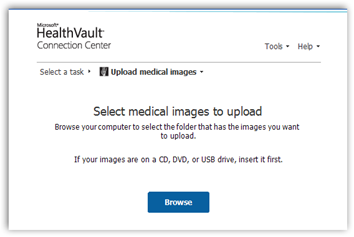
HealthVault Begins Storing Medical Images (Dicom) Using Windows Azure Cloud Services With Full Encryption

I rant here all the time about the gluts of software, especially in the mHealth area that appears almost daily and gee why not save some coding time and efforts, and make it easier for consumers and doctors to tie this all in.  HealthVault also takes advantage of the “Direct” program and was one of the first out of the barrel to write an interface.  One huge advantage here is the connecting of all the devices that are out there, as who in the heck wants to use several different software programs, I don’t and I can safely say consumers don’t want multiple software connections either. 

HealthVault-Setting Up Consumer Email Address For Secure Messages Using Government Direct Project

Who’s going to write a ton of additional code and run up the tab?  It’s what we are doing and as he points out grant money is getting tight as other items for Health IT these days, so reinvent the wheel and shovel out more money without even talking a look?  I don’t write any more but given a choice of some free code with all the built-ins available or start and write an interface from scratch?  No I would not start from scratch and would certainly take advantage of what was out there for fee by all means, and I like the security built in and that too is part of the reason I happened to stay with a Windows phone but that’s another story for another time and you can search and find that post here too. 

So much of the time key executive individuals who have never written a stick of code can’t see this value and today I sit back and read and research the web for this blog and I see it all over the place and it’s expensive too.  Don’t feel bad though have have an entire Congress full of folks that don’t get it at all the they are supposed to make laws to govern it.  FYI, this is where the creative technologists and the CIOs come in real handy as they get it for the most part and know what technologies work with others, that is if they are not over whelmed and over worked to the point to where they have time to help you. 

Even our US CTO occasionally gets carried away with his pep talks with trying to entice developers to “get rich” and help the country with writing code, but we all know that’s not going to happen and again I wish I could see more of a collaboration focus instead of being stuck on “innovation” as we don’t lack there at all, but we do need to do much better in the collaboration area.  Patients and doctors would love it. 

I think the 80% factor Sean mentions as re-plumbing is pretty accurate as again just researching and reading what various software and device companies put out there, kind of validates it.  Why do you think we have so much software out there that nobody uses on the consumer side?  One other quick item comes to mind too and that was the Surgeon General’s PHR which the developers actually did a pretty good job with the API and it went nowhere too, so again something to think about here. 

So what’s the plan here, spend a lot more money and write tons of code to further fragment what we have out there, or maybe think about at least taking a look at free resources that are there to build on.  BD 

Everything we’ve built into the HealthVault platform was created to help developers create connected health experiences --- leaving researchers and innovators free to focus on the novel parts of their work instead of all the plumbing necessary to healthcare. Just as a sampling:

Development on HealthVault is completely free. There is no charge to users, developers or enterprises to connect to HealthVault in the US. There is also no advertising on the system and we have strict terms of use that restrict Microsoft from looking at or selling data stored in the platform.

Privacy, security and compliance are baked in. HealthVault has undergone a ton of internal and external penetration testing and auditing. We have a fully HIPAA-compliant model for interacting with clinical systems, can sign BAAs when appropriate, and are registered with the FDA as a Class 1 medical device. So taking applications into real use is WAY easier that starting from scratch.
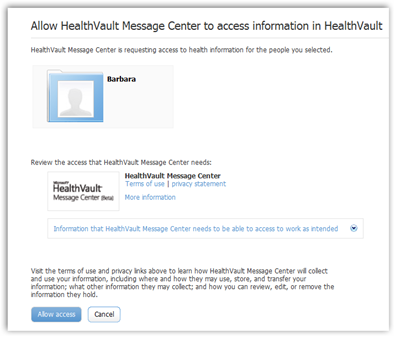
Home monitoring devices are already hooked up. More than 70 off-the-shelf home care devices are already connected to HealthVault using HealthVault Connection Center on a PC – and many more that share data with HealthVault through web or wireless connections. So if you want to experiment with blood pressure, glucose, pulse oximetry, weight, ECG, peak flow or heart rates and fitness, you’re ready to go. And if you want to connect a new device directly to HealthVault, there’s an API for doing that too.

Linking to clinical systems is simple. Much of what we do is move data between clinical systems. There are a bunch of patterns for matching patient identities to office systems for this purpose. HealthVault can automatically read and return data in the CCR and CCD (that link is kind of old but a good intro; note we now do data reconciliation automatically) formats that are quickly becoming the easiest way to exchange data with EHRs. We also fully support the Direct secure messaging protocol as another option.

HealthVault supports novel and extensible data types. HealthVault can store full-fidelity DICOM medical images, and allows users to burn them with viewing capability to CDs and DVDs. We have data types for genetic SNP data. And of course all of the clinical and fitness types you could ever think of. Then again, if you do think of a new one --- you can store that too, or extend an existing one.

Mobile development is a snap. Connecting mobile device platforms like iOS, Android and Windows Phone is completely supported with API libraries for each platform.

HealthVault is already connected to many data sources. HealthVault isn’t just about devices and manually-entered data. Users can connect their records to major pharmacies and labs, more and more hospitals and practices, use services that digitize paper records, etc.… so you can do research that uses data without having to figure out how to acquire it all from scratch.

All of this is super-important for research work. Grant money and coding talent is scarce, and I cringe whenever I see somebody presenting research that is 20% new stuff and 80% plumbing that's been done over and over before. By standing on top of HealthVault, smart folks can do more good work and try things that otherwise might have seemed out of reach.

http://blogs.msdn.com/b/familyhealthguy/archive/2011/08/18/healthvault-as-a-platform-for-research-development.aspx

Rabu, 10 Agustus 2011

Microsoft Tags (Barcodes) Used with LifeSaver Mobile Application-Paramedics Scan a Printed Card to Access Your Records

Ok I like bar codes as everyone who visits here knows and this is yet one more way the Tags from Microsoft can be used.  I have written about Razcode encrypted imageMicrosoft Tags here before and how they work with HeatlhVault and even Google Health as well as many devices such as the Withings Scale.  As a matter of fact I have a Microsoft Tag on this site in the right hand corner so go ahead and scan and read the blog on your smart phone too.  Here’s a couple links from the Duck archives below and there’s lots more like this if you do a search on the Medical Quack. 

RazCode/Windows Tags – Bar Coding to Add Information to PHRs, EHRs, and More…
Connecting HealthVault/Google Health and More to RazCode Encrypted Microsoft Tags – Automate Data Inputimage
RAZCODE (Microsoft Tags) Using Smart Phones to authenticate MDs When e-Prescribing Controlled Substances

“Auth Tag” – Mobile Microsoft Bar Code Tags Using a Smartphone To Scan for Two Factor Authentication Giving Users Digital Tokens

Microsoft Receives Patent-Techniques to Create Counterfeit and Tamper Resistant Labels Using Fiber Optic Strands-Bar Codes Getting Closer for Drug/Device Recalls?

I have 2 links at the top of the blog and I have been campaigning for their use with FDA recalls, and when everyone talks about consumer use of mHealth, this is the ticket and it kills many birds with a half of a stone. 

Life saver App

A while back the folks over at Microsoft were kind enough to add my recommendations to the list too.image

Tag Could Boost Safety in Medical Industry

“Microsoft Tag has had an exciting impact on the medical profession lately. The quarterly magazine Micro-Cap Review has recently featured one Ms. Barbara Duck, author of the Medical Quack blog, on the subject of Tag in the medical industry.

Micro-Cap Review is at the fingertips of all the movers and shakers of the medical industry, with approximately 35,000 subscribers and distribution in New York's financial district and conventions worldwide. The publication recently featured Duck and Tag in an article titled “Bar Code Solutions for those Pharmaceutical and Medical Device Recalls That Never End.”

Barcodes are where it’s happening and this also has use for in case of an emergency.  I am guessing your emergency information would be what you want on here, like medications, allergies, etc. enough to save your life and prevent mistakes made by clinicians that could occur without having the information ahead of time.  It is HL7 compatible. Again, bar codes and their use save lives whether it is medical information or finding recalls…FDA…hint..hint…as well as the drug and device companies.  I was also recently featured in the Milwaukee Journal newspaper with my thoughts on the recall issue too regarding the big Triad mess and the factory is still closed.  So all you frustrated folks out there trying to entice consumers into using mobile medical applications, get the vehicle that shows immediate value to the consumer and get behind this, otherwise we just keep having one more seldom used app after another showing up, which are of no value unless people want to use them and again “see value”.  BD

Recalled Wipes From Triad Still Out There in Consumer Medicine Cabinets and Possibly At Some Retail Locations-Manufacturers and FDA Need To Do A Better Job-Bar Codes

Scan any newspaper’s recent headlines and it becomes obvious: the world has been experiencing a rash of natural disasters, from the earthquake and tsunami in Japan, to the horrific tornadoes in Joplin, Missouri and the southeastern United States. And that’s just in the past few months. Sadly, each of these disasters has claimed many victims. One thing that could have helped was a technology that keeps track of the unique medical histories of every person affected. Now, thanks in part to Microsoft Tag, there is just such a technology: the LifeSaver App.

The next phase of the App, coming in about 30 days, will allow for the uploading of x-rays, EKG’s, EEG’s or any other file stored in PDF format. It will also have the ability to store a living will or a do-not-resuscitate (DNR) order for a patient.

Tag to the Rescue | Success Story | Microsoft Tag

Rabu, 03 Agustus 2011

FDA Clears Telcare's mHealth Cellular Connected Glucose Meter–Information Collected Via Web Site

This is an interesting product and it connects to PHRs like HealthVault and there are imageall types of analytics included for both patient and doctor use.  I read through the website and the results go directly to a website and so my questions here are privacy with selling data.  According to what I read the meter is free and uses normal and customary glucose strips, etc. that are normally covered but the device is free, so how do they make money?  The first thought that comes to mind is either by selling data or insurer reimbursement and I didn’t see any statements to reflect either other than the fact that with someone under 13 years old would be somewhat exempt? 

You can have results sent to family members, etc. and reminder and other types of notices are provided, i.e. a high reading etc.  In addition to the mobile app it appears that glucose is getting social with who one decides to share their information with.  If a provider were to use I would certainly hope that it would go directly to a medical record as this is the issue today with so many apps out there that doctors are pressed for time as it is much less had a full battery of apps to monitor.  BD 

Telcare, Inc., an exhibitor at this year's annual meeting of the American Association of Diabetes Educators, has just received clearance from the imageUS Food and Drug Administration to market the Telcare BGM, the first cellular-enabled glucose meter, combined with an FDA-cleared database (Telserve) to aid in the management of diabetes. The device allows patients to transmit their blood glucose readings to caregivers and family members, and receive immediate coaching and clinical feedback relayed to the screen of the glucose meter. The patient does not have to take any additional steps to transmit the data and the cost of the wireless connectivity is included in the price of the device and its accompanying test strips. Thus, users will have a much richer clinical experience at no additional cost when compared to standard glucose meters.image

The Telcare glucose meter aims to bridge the last mile between patient and caregiver. Real time information is transmitted to the electronic medical record, personal health records, such as Microsoft Health Vault, and a variety of smartphone apps designed to connect patients to family members and to each other. While other marketplace solutions have relied on Bluetooth transmission to cellphones, connections of glucose meters to personal computers and cradles, or requiring the patient to manually enter results into a phone app, Telcare's solution requires no additional steps on the part of the patient.

Telcare's First-in-class mHealth Connected Glucose Meter Cleared by FDA | Benzinga.com

Jumat, 22 Juli 2011

Health IT Company MMRGlobal (MyMedicalRecord.com) To Sell 4 Million Shares To Chinese Investment Partner

Back in 2008 the company merged with Favrille Biotech and is located in the Los Angeles area after the website has been online for around 6 months or so.  We imagedon’t hear too much in the news about the company but they are yet another PHR for patients to sign up and use and I am guessing based on the content here that the hopes are to expand the same availability to parts of China which would make sense for their investment. 

Favrille Biotech and MyMedicalRecords.com, Inc. Announce Merger Agreement

From the website:

“MyMedicalRecords is built on proprietary, patented technologies that allow documents, images and voicemail messages to be transmitted and stored using a variety of methods, including fax, e-mail, phone, or file upload, creating an integrated communications platform that does not rely on any specific electronic imagemedical record (EMR) system to populate a user's account. In the event of an emergency or disaster, medical personnel and first responders can retrieve potentially lifesaving information accessible via a separate Emergency Login.
MMRGlobal's professional solution for healthcare providers, MyMedicalRecordsMD (MMRPro), is designed to give physicians and hospitals an easy and cost-effective solution to digitizing paper-based medical records and sharing them with patients in real time through the integrated patient portal MMRPatientView. MMRPro's feature set includes an e-Prescribing solution to improve safety and costs.”

Thinking back it has been a while since I covered anything here on the company but looking at the board of advisors members kind of refreshed my memory seeing Buzz Aldrin, Sugar Ray Leonard , a US Congressman Richard Gephardt (wonder if he uses the PHR,  I would be shocked and pleasantly surprised to hear yes on that one) and a few other folks.  Now that Google Health is winding down here’s another alternative and it appears they were already a partner so transferring records might be easy enough.  If you need to look up a drug they have the Cerner Multum listing on the site as well.  BD 

LOS ANGELES, CA, Jul 21, 2011 (MARKETWIRE via COMTEX) -- MMRGlobal, Inc. /quotes/zigman/606524 MMRF -2.44% , a leading provider of health IT products and services, including the MyMedicalRecords Personal Health Record (PHR) for use by consumers and healthcare professionals and MMRPro for physicians and hospitals, today announced that the Company and Unis-Tonghe Technology (Zhengzhou) Co., Ltd., MMR'S Chinese Joint Venture partner, have entered into a series of warrant purchase agreements whereby Unis-Tonghe has the right to purchase up to four (4) million shares of the Company's common stock: one million at 8 cents per share, an additional million shares at 12 cents per share, an additional million at 16 cents per share, and one million at 20 cents per share.

Our joint plans include a customized version of MMR's proprietary Personal Health Record and professional document imaging and management solutions which are embedded in MMRPro." (visit http://www.mmrprovideos.com )

Unis-Tonghe recently received official notice that they are a winner of a bid to provide eHealth and Electronic Medical Record Services for 164 County/District of Henan Province in China. MMRGlobal announced the signing of a definitive agreement with Unis-Tonghe to be joint venture partners in January 2010.

MMRGlobal Announces Agreement for Four Million Warrants at Market Premium by Chinese Investment Partner - MarketWatch

Senin, 04 Juli 2011

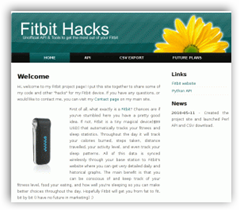
Fitbit Profile Sexual Activity Shows Up In Google Search Results–Default Privacy Settings Allow Search Engines To Post

Ok this sounds a little Facebookish with the default set to place this on the web with having to “uncheck” the box to be private.  Now in addition, how many that are using Fitbit are tracking their sexual activity and does this account for exercise with calories burned?   Last year a guy hacked his Fitbit so he could have his information directly instead of going through the web interface.  Google Health, which is now going away does allow for the information to be input. 

image

Patients Want their Data–This Guy Hacked a Fitbit to Get it Along With The API Algorithms

Some folks feel different about the automation of collecting and made this comment below.  You can also sleep with a Fitbit on and maybe this is how some of the sexual activity snuck in here?  Also, we have the sales and marketing again with data so what are they selling and to who so thus the hack mentioned above. 

image

“Manual collection of information means the collector is focusing on the data (whenever collection occurs) and has the opportunity for short reflections, and can keep abreast of the data more easily. We have found that completely automating collection removes these opportunities and can actually hinder individuals in keeping track of and making sense of their data.”

This was a good find over at Tech Crunch and They said it was not Fitbit’s fault totally but I’ll disagree a bit there as we are talking some HIPAA guidelines so cheers to all of those burning their calories and you might want to check with your security settings and while you track exercise with Fitbit, do you really want to sleep with it?  To each their own.  BD 

Yikes. Users of fitness and calorie tracker Fitbit may need to be more careful when creating a profile on the site. The sexual activity of many imageof the users of the company’s tracker and online platform can be found in Google Search results, meaning that these users’ profiles are public and searchable. You can click here to access these results. The Next Web reported this earlier this morning.

When you create a profile, the default privacy setting allows profiles to be found in search results (Google, Bing, etc). If you don’t unclick this setting, it will obviously make your profile public for anyone to find.

Sexual Activity Tracked By Fitbit Shows Up In Google Search Results

Kamis, 30 Juni 2011

Microsoft To Offer Direct Protocol To Help Google Health Members Transfer Data to HealthVault-Still Big News for a Product Being Discontinued to Lack of Interest?

If you read here often enough then you know I have been a big advocate of personal health records, but I just wanted to add a short little commentary here on the huge amount of press the discontinuation of Google Health has received. If this was a product that is being shuttered due to lack of interest, why all the big press?  I guess I am adding to it, but again trying to keep all updated but in the last week this is totally ironic that so much time and effort has been directed in bringing the news around.  It just seems like a bit of an oxymoron if you will, right?  I added a tweet on Twitter to this effect and had several agreeing with me as to the substantial press given for something being discontinued for lack of interest, oh well.  I’m just trying to make sense of of press again which maybe I should leave that alone. 

Google Health Personal Health Records Will Call It Quits Effective January 1, 2012

Ok back on track here for those who were using Google Health, watch for an announcement to come forth within a few days to make it easier to transfer your health records, and this is good news so if you hold off for a few days, as Google Health records are not going anywhere for a while and you have time, this may make the process a little easier.  I do wonder at some point in time if we will ever hear about how many files were actually transferred? 

Right now though if you look at where software overall is going in healthcare it’s a mess and we have way too many technologies out there and frankly I’m a bit worn out here at the Medical Quack on updating some of this too, and I’m not speaking of the PHRs here, but all the other garbage that looms out there.  With everyone “marketing their ass off” and all the privacy issues in the news and with some good reasons for concerns, where does one put their priorities today? 

For a couple of years now I have written frequently about the folks who write these blazing reviews on PHRs and then find the authors themselves have never touched one or created an account at all, but merely somewhat are posing as “healthcare magpies” out there and for some reason or another find this driving force to be an “expert” and tell others what they should do when they don’t buy in themselves, just a odd observation that’s been somewhat going on since PHRs began.  It would certainly be nice to have a few less “healthcare consumer magpies” out there and would reduce the size of my inbox on some of the software being created for consumers today. 

When it comes to lack of role models there’s no bigger black eye here on this topic than HHS, NIH and CMS themselves and that’s the danger of having a department staffed with too many of what I call “non participants” themselves but somehow take the stand of being experts at telling everyone else what they should do, a sad state of affairs for the consumers by all means and here’s a link to a prior post, one of several where some of my own feelings are spoken.

Again, this is not to discount PHRs and the services that Google Health and HealthVault are providing as I have and use my HealthVault account and try to share what I learn with others, but just one more time to point out a huge weakness in how some areas of the government fail with providing motivation and incentives for consumers, a sad state of affairs indeed and they just don’t get it.  BD 

HHS National Plan to Improve Health Literacy – Not Going To Happen Until We Focus on Using Technology (The Tool for Literacy) Which Includes Role Models at HHS And Other Places in Government

NIH Announces Plan to Develop Medical Image Sharing for PHRs-Role Models Would Help Stamp Out “Magpie Healthcare”

On July 5th, the companies plan to announce that Google Health users will be able to transfer their health records to new or existing Microsoft HealthVault accounts using the emerging, Direct Protocol open standard for secure health data exchange, said Nate McLemore, Microsoft general manager of business development and policy, Health Solutions Group.

Using the Direct Protocol to transfer Google Health records into HealthVault means Google Health users will be able to "email" their health data to themselves, and then upload the information into their HealthVault accounts, said McLemore.

"Direct Protocol will make it easier," he said. Currently, Google Health users essentially need to "cut and paste" records from GoogleHealth to HealthVault, he said.

While the two companies work on a streamlined process for transferring files using the Direct Protocol, Google Health has posted instructions on how to "manually" move health data to HealthVault.

McLemore would not estimate the number of Google Health users that Microsoft expects to transfer their data to HealthVault, although "we can scale" to support any number of users, he said.

Microsoft Reaps Spoils Of Google Health's Demise -- InformationWeek

Jumat, 24 Juni 2011

Google Health Personal Health Records Will Call It Quits Effective January 1, 2012

There’s a lot of changes around the web these days and keeping the information and APIs current to connect as Google Health was set up requires maintenance from the developing side and perhaps it was all money going out as an expense and not much coming back. I joined both Google Health and HealthVault when they became available a couple years ago and evaluated and used both. The device side of Google Health was slow to catch up with Microsoft Healthvault so in that respect they were out marketed. 

The system was easy enough to use and brought medical prescription records and lab results in, so information processes were similar to HealthVault, but again the big dividing line was “devices” where HealthVault went right away.  In addition, Google has some other interests they are chasing right now in other business areas to build and sometimes it requires a greater focus on few items, just like Cisco has done as well.  If you are spread too thin and can’t product the desired results then it’s time to take a look at the over all big picture.  Also when you step back and take a look at other “Google branded” programs that connected, there were not many and again this is where HealthVault took the ball and ran with it as they have suites of medical software to connect and create greater value and in today’s world of Health It and that makes a big difference.  There’s still the over all problem of not enough consumers using a PHR and that comes from the big lack of role models too as we don’t have any, but everyone repeat like a magpie and tells you “you should do it”. 

Granted that’s another problem but I hear this day in and day out and shoot half the people who write these blazing reviews on PHRS never use one, so that’s issue from the entire consumer side and we don’t even know if the Surgeon General uses the Surgeon General’s PHR either, silence is deafening from Washington on PHRs for the most part.  Not a one will share any of their experiences so this coupled with Google’s other interests with competition barking at their door with other web services probably lead to the announcement today too.  You have until the end of the year to move your records and after that, they will be deleted. 

Another Google Program called “Power Meter” for monitoring electricity in the home is also being discontinued in September.  BD  

Google has officially announced plans to shutter Google Health, its personal health record platform, come January 1, 2012. Data stored in Google Health will continue to be available for download until January 1, 2013. Google plans to add a direct transfer option to Google Health in the coming weeks that will enable users to transfer their health data to any other system that makes use of the Direct Project protocol. After that date any remaining data in Google Health will be deleted.

“In the end, while we weren’t able to create the impact we wanted with Google Health, we hope it has raised the visibility of the role of the empowered consumer in their own care,” Google Health’s senior product manager Aaron Brown wrote in the company’s blog. “We continue to be strong believers in the role information plays in healthcare and in improving the way people manage their health, and we’re always working to improve our search quality for the millions of users who come to Google every day to get answers to their health and wellness queries.”

Official: Google Health shuts down because it couldn’t scale adoption | mobihealthnews

Jumat, 10 Juni 2011

One More Reason for Slow EHR Adoption Cited–Software Being Designed To Meet Bureaucratic Standards Rather Than Needs of Doctors and Patients

The testimony today came from Ingenix, and they should know as they are the leaders of all the analytics, coding and algorithmic formulas out there, that less time imageand attention is being paid to the user experience here.  You know I think I can agree with that because that’s about all we hear in the news today about medical record systems is the aggregation for compliance and the quest to save money and there has not been much said in the area of the user experience.  We certainly know that PHRs for patients are not catching on very quick, with the exception of closed systems like Kaiser who has maintained their original concept. 

I also agree due to the fact that scribes are growing at a rapid rate that there must be something to this:) It’s a real irony when you want to bring doctors into the world of Health IT but the scribes which were supposed to be temporary jobs continue to thrive as full time assistants.  I can only say for doctors who are on staff at more than one hospital with each one using different systems it must be a real joy at times, and keep in mind that upgrades and changes take place frequently with the software too, along with new rules and regulations from the hospitals.  As you can see in the recent post below, one doctor thinks scribes are so great that nurses should have them too.

Scribes Still Continue to Grow in Hospitals–One Doctor Stated He Could See the Trend Expanding To Help Nurses Too

The EHR systems today are much more complicated and intense than they were just 5 years ago and a lot of this is a good thing with new reporting and so on but let’s face it the screens need to be easy enough to use to enter and find information. 

On the PHR side I still can’t get a peep out of the ONC, the Surgeon General or anyone in government talking about their personal experience with a PHR and this is the “social age” to where you would think if they want consumers to jump in here that they would consider being role models, but most of the time when I dig down into this topic I find a great majority of those who tell us we should be using a PHR, don’t bother themselves so we have a lot of the kettle calling the pot black when it comes to PHRs, in other words “Magpie Healthcare” that continues to thrive. 

Needless to say electronic records are here to stay, in what and shape and form along with price is always up for discussion <grin>.

It’s a bear writing an EMR and getting it right too and I don’t think today we have the one on one relationship with the developers and the doctors that used to exist too, as we are so busy trying to figure out what to do with all the other data in other areas of our lives.  This is an area that I feel is important not to miss, just based on what I did a few years ago as I thought I had a really neat new update and the doctors told me it sucked, so back to the drawing board to see what could be salvaged and usually work in some new requests from the doctors as there was always constant feed back and I liked that.  Sure I had to get over myself on many occasions and was a bit disappointed as when things didn’t work it meant a whole lot more time on the keyboard but that’s the way the business works with a partnership between both and again I just don’t think we see that as much today.

The article goes on to further say that the distance we are seeing today with patients/doctors with the software is further than it’s ever been.  imageApplying for the stimulus money is not that difficult as it is set up but the changing Meaningful Use changes bring a lot of questions and uncertainties to the picture too, but we have technology throwing us that new left curve every day and that part is not going to change.  We can, however, look a little differently too on how we interpret things as far as the program and design and that’s continuous also as it’s world we live in today. 

Come to think of it though, this is especially noticeable in Healthcare but it exists in other industries too with more interactions done via computer; however in healthcare with medical records we have very high standards.  It’s kind of a shame though too as we go through all the time and effort with certifying medical records and do nothing for certifying payment algorithms for payers so the buck and red tap always stops there as the coding for diagnosis and treatments continues to get more complicated as well.  BD

Small medical practices warned Congress on Thursday that health information technology risks being less than useless if it's designed to meet bureaucrats' arbitrary standards rather than the needs of doctors and patients.

Testifying at a House Small Business healthcare subcommittee hearing, the CEO of HIT Services company Ingenix said cost isn't the main reason physician's offices are struggling to make the switch to paperless. Rather, Andy Slavitt testified, the "purchase and design of technology (…) have taken a back burner to all of the compliance reporting requirements" needed to qualify for federal incentive payments.

"Today," Slavitt said in written testimony, "the end-users, doctors and patients, are further away than ever from system design, because new product development is focused on satisfying those regulatory hurdles, rather than on simple innovations that improve productivity."

Small practices give lawmakers an earful about DC-centric HIT regulations - The Hill's Healthwatch

Kamis, 26 Mei 2011

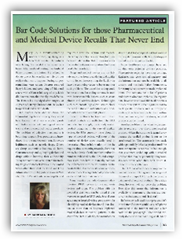
FDA Recalls Never End–Bar Codes Solutions for Drug, Device and Over The Counter Products– Medical Quack Featured Article in Micro-Cap Review Magazine

This is an article that I wrote as the request of one of my sponsors for the Micro-Cap Review magazine which comes out once a quarter with articles referencing many types of Micro-Cap companies and modern day technology solutions and imagecompanies featured. Disclaimer, the company is a sponsor of the Medical Quack blog, but who better to collaborate and network with as I mention seeing collaboration efforts falling on the short side in Healthcare all the time.  I have a couple more posts that are a grouping of posts that I have made on this topic and you can find them at the links at the top of the site.  I’m almost thinking here that it might become a pre-requisite to have a Microsoft Tag to sponsor here, as it certainly can’t hurt at all.  

In addition with so many platforms moving to the cloud there’s a mention too of how HealthVault works with Microsoft Tags and is now in the Azure Cloud.  As you may or may not be aware, Microsoft Tags work with the Withings Scale and HealthVault so one technology can stand to answer a lot of calls.  (Use the + zoom at the bottom to brings this article to full page zoom to read).

HealthVault Begins Storing Medical Images (Dicom) Using Windows Azure Cloud Services With Full Encryption

Micro-Cap Review Magazine - FDA Recalls Never End - Featured Article

So why shouldn’t the FDA, Drug Companies and Medical Device Manufacturers have a simple and easy to use system to help consumers find recalls? I have asked that question many times and consumers voted overwhelmingly that they wanted it and more importantly “saw value”.

The “value” here is important as it is the springboard to get consumer/patient participation in other areas of mobile technologies in healthcare, but as of yet, we still have folks doing reports trying to figure this out and so many of the reports could be eliminated by just having some role models finding their own way into participation.

You don’t know how many times I communicate with individuals that don’t even use the consumer health software they create but rather seem to stick to the outdated paradigm of “its for those guys over there’, sad. 

At any rate I hope you enjoy the article and see where one man’s death could have been prevented with such a process and perhaps this will spur come creative thinking with the FDA, Drug Companies and Device Manufacturers, as this is a collaborative effort, something we truly need more of today. 

Consumers need the information at their finger tips and not having to go through and navigate web sites as that is the procedure today.  You can get instant information about computer printers, food items at the story but when it comes to something that could kill you, nobody pays any attention.  BD 

http://www.scribd.com/doc/56311471/Micro-Cap-FDA-Recalls-Never-End

Medical Record Bank Receives “Patent” for Personal Medical Record Platform

Ok here we go, “patents” on PHRs, those items that have a low adoption rate from consumers, why, it’s work and the value is yet to be seen by the consumer.  I write quite a bit about PHRs and provide links to a few free ones for consumers to get information and get started.  Some “closed” system like Kaiser Permanente do a good job in providing the PHR for the patient, but everyone is not a patient of theirs so we need other alternatives for those outside theirs and others systems. 

If you read around the Medical Quack often enough you know I rant frequently about the lack of role models, especially with PHRs, and for good reason, so do we know if the Surgeon General uses the Surgeon General’s PHR?  Nobody is talking and also at the NIH, does Francis Collins see value in a PHR?  I just ask how about it folks, is this just for “those guys over there”?

NIH Announces Plan to Develop Medical Image Sharing for PHRs-Role Models Would Help Stamp Out “Magpie Healthcare”

When you visit the website, there’s not a whole lot of information to be seen, at least as of today and this is pretty much what you see and there’s an email address given for more information.  Being they have a patent though we may not see more than this on the site, but time will tell.  The PHR is being promoted as a connection that will work with an EMR installation.  Again, it states EMR, so whether or not we have EHR connectivity remains to be seen or mentioned and any platform that can load the information for the consumer instead of one having to manually do it themselves is an obvious plus. One of the reasons to be a “hands on person” is due to the fact that “expert dependency” as we know it today is on a downslide, and this is not due to one’s education and personality, it’s largely due to the fact that we have so much to keep up with relative to data today, that they too can’t keep up as last time I looked we are all still just mortals out there.  BD 

image

Medical Record Bank has developed a unique internet-based digital personal medical record system that collects comprehensive data from all of an individual's healthcare providers. For consumers, it is as easy to use as e-mail, and it places no new burdens or disruptions on providers.

Accurate and inexpensive, it enables a patient and the patient's authorized doctors to access original medical records from any internet connection globally. The system enables patient labeling and authentication of medical records, so that the records are presented in a user-friendly environment. In addition to a patient-labeled and authenticated chronological medical history, there is a health care diary to complete the health portrait for the intervals when a patient is not seen by a professional provider, and a critical health information summary that offers a snapshot of the patient status. The system also provides disease specific adjunctive tools.

MRB is bringing the benefits of this system to consumers as rapidly as possible by working independently and in partnership with other firms. The system can be used as a patient portal for EMR installations and in other applications ranging from disease management to insurance fraud detection and prevention. MRB also expects to provide licensing opportunities in related areas.

Massachusetts Firm Awarded U.S. Patent for Personal Medical Record Innovation